

Keynote: Research integrity and academic authority in the age of artificial intelligence: From discovery to curation?
Loading...
Location
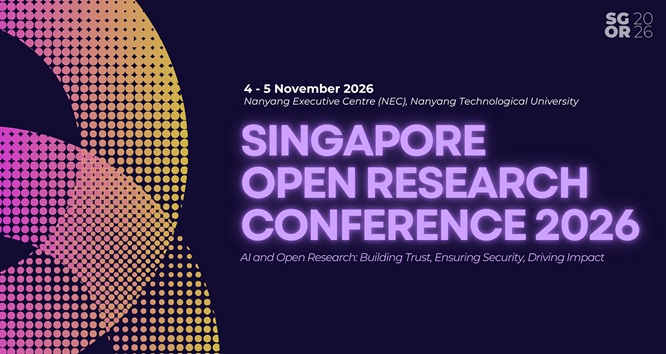
Auditorium, Nanyang Executive Centre (NEC), Nanyang Technological University, Singapore
Start Date
5-11-2026 9:45 AM
End Date
5-11-2026 10:15 AM
Description
Artificial intelligence is reshaping research in ways that extend far beyond productivity gains. AI systems now accelerate discovery, reorganize scholarly labour, and mediate access to expanding scientific literatures, while also introducing new epistemic and institutional vulnerabilities. This presentation argues that these developments operate through three reinforcing mechanisms: displacement, as frontier AI research shifts from universities to private laboratories; contamination, as generative models strain norms of reproducibility, authorship, and peer review; and dependency, as universities increasingly rely on proprietary systems they cannot fully interrogate or reproduce. Together, these pressures challenge research integrity and weaken traditional bases of academic authority. The paper argues that universities are unlikely to retain legitimacy by competing with industry at the technological frontier. Instead, their future role may lie in exercising judgement over research quality, curating trustworthy knowledge, and serving as ethical and epistemic counterweights in an increasingly AI-mediated research ecosystem.
Additional URL
https://libguides.ntu.edu.sg/SGORconference2026/home
Embargo Date
11-24-2026
Keynote: Research integrity and academic authority in the age of artificial intelligence: From discovery to curation?
Auditorium, Nanyang Executive Centre (NEC), Nanyang Technological University, Singapore
Artificial intelligence is reshaping research in ways that extend far beyond productivity gains. AI systems now accelerate discovery, reorganize scholarly labour, and mediate access to expanding scientific literatures, while also introducing new epistemic and institutional vulnerabilities. This presentation argues that these developments operate through three reinforcing mechanisms: displacement, as frontier AI research shifts from universities to private laboratories; contamination, as generative models strain norms of reproducibility, authorship, and peer review; and dependency, as universities increasingly rely on proprietary systems they cannot fully interrogate or reproduce. Together, these pressures challenge research integrity and weaken traditional bases of academic authority. The paper argues that universities are unlikely to retain legitimacy by competing with industry at the technological frontier. Instead, their future role may lie in exercising judgement over research quality, curating trustworthy knowledge, and serving as ethical and epistemic counterweights in an increasingly AI-mediated research ecosystem.
https://ink.library.smu.edu.sg/sgor2026/main/programme/3