


What can data repositories do for open research?
Loading...
Location
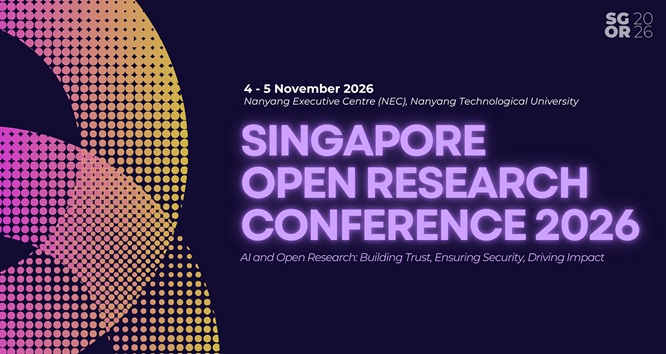
Auditorium, Nanyang Executive Centre (NEC), Nanyang Technological University, Singapore
Start Date
5-11-2026 1:45 PM
End Date
5-11-2026 2:00 PM
Description
Drawing from the lineage of Open Source, what can we expect from the ideal of Open Research in a society where data services have been increasingly centralized? What can researchers do to ensure control over the toolsets and services necessary to perform their research and retain their output? What kinds of support should research-performing organizations offer to researchers and the broader communities so that they can practice Open Research in a meaningful way? From the perspective of a team operating a public repository for research data, we shall strive for the following: 1) make data deposit and reuse iterative and collaborative, 2) move data closer to computation and automation, and 3) enable data resilience by standardizing data packaging, thereby enabling data portability and individual agency. We further suggest that a culture supporting active practices of collaborative research is needed to sustain research data infrastructure in academia.
Additional URL
https://libguides.ntu.edu.sg/SGORconference2026/home
Embargo Date
11-24-2026
What can data repositories do for open research?
Auditorium, Nanyang Executive Centre (NEC), Nanyang Technological University, Singapore
Drawing from the lineage of Open Source, what can we expect from the ideal of Open Research in a society where data services have been increasingly centralized? What can researchers do to ensure control over the toolsets and services necessary to perform their research and retain their output? What kinds of support should research-performing organizations offer to researchers and the broader communities so that they can practice Open Research in a meaningful way? From the perspective of a team operating a public repository for research data, we shall strive for the following: 1) make data deposit and reuse iterative and collaborative, 2) move data closer to computation and automation, and 3) enable data resilience by standardizing data packaging, thereby enabling data portability and individual agency. We further suggest that a culture supporting active practices of collaborative research is needed to sustain research data infrastructure in academia.
https://ink.library.smu.edu.sg/sgor2026/main/programme/17